Tuesday, January 26, 2021

Discover The Day Creek Trailhead


Friends of the Pacific Electric Trail

The next stop on our Tour is THE DAY CREEK TRAILHEAD


Businesses giving back to OUR community, is what continues to make Rancho Cucamonga so special.  With the continued success of residents and visitors incorporating exercise on the Pacific Electric Trail, there is always room for additional amenities for the community to discover and enjoy.


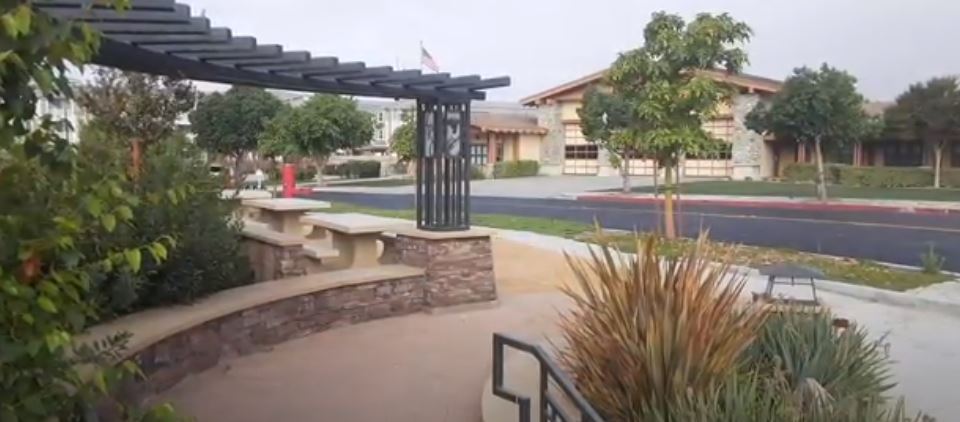
The newest shopping center at Day Creek and Baseline is no exception.  Through the generosity of the property owners / developers designed and installed an exceptional trailhead at the street crossing adjacent to the Fire Department for walkers, runners, or cyclists to enjoy.  Its beautiful design and location add to the charm of the neighborhood and is a convenient place for the public to meet up and enjoy a picnic meal.  The trailhead features shaded seating, several picnic tables, a bike fix-it station, bike racks, doggy station, trash cans and a water fountain that is pet friendly.


The tradition of amenities along the PACIFIC ELECTRIC TRAIL help increase the user experience, whether you are walking your dog, commuting, rollerblading, running or cycling.  Vision combined with synergy for our community created this beautiful amenity for the neighborhood to enjoy.  Are you a “Trail regular” who enjoys amenities on the Trail?  Please comment below.

Friends of the Pacific Electric Trail


Tuesday, January 19, 2021

Remembering The Alta Loma Packing House


The next stop on our Tour is the historic ALTA LOMA PACKING HOUSE

Friends of the Pacific Electric Trail


The Alta Loma Packing House was built in 1926 and is one of the few remaining remnants of Cucamonga’s rich citrus and wine industry. From the packing that was situated on the rails of the Pacific Electric Railroad, produce was shipped all over America. There was another NEARBY packing house that was built in 1913, but sadly it burned down in the 70’s.

In the early 20th century, there were competing “citrus grower” associations in the area and in 1920 they merged to form the “American Fruit Growers.”  This consortium convinced Henry Huntington to adjust the Pacific Electric rail line north into Alta Loma to help the growers get their harvest shipped sooner, instead of loading and unloading their trucks to transport into Pomona.


After the use of rail lines diminished completely in the early 1990’s, the packing house fell into a dormant state and stood as a reminder of the citrus and wine industries that flourished here for decades.  In the last few decades, it had been a discount goods store, a Vegan Grocery store, as well as a bicycle co-op location that provided free bike repair for cyclists on the adjoining Pacific Electric Trail. 


It is currently under new ownership and the management team is developing a complete renovation to transform over 27,000 square feet into a thriving business center and public market that will include: shops, restaurants, bike parking, and distilleries and more. The vision for this beautiful packing house will breathe new life into the Alta Loma neighborhood and become a destination place for walkers, cyclists and visitors that enjoy the Pacific Electric Trail.  We look forward to its revitalization! Did you ever wonder if the Alta Loma Packing House will be restored?  Please comment below.

Dennis Jones

Friends of the Pacific Electric Trail


Friends of the Pacific Electric Trail

 Dennis Jones Friend of the Pacific Electric Trail

Like us on Facebook

Watch this Episode of the Tales from the Trail here


Tuesday, January 12, 2021

Early Etiwanda Welcomes Chaffey Garcia House


Friends of the Pacific Electric Trail

Our next stop on our tour is the historic CHAFFEY GARCIA HOUSE


The Chaffey Brothers are some of the most important entrepreneurs that helped transform the Inland Empire.

The sons of George Chaffey Sr. bought this house in 1881 from a retired Portuguese sea captain named John Garcia. The father had come from Ontario, Canada with hopes of helping his illness, which was the dreaded tuberculosis, called “consumption” back then.

It was recommended that the warm dry climate in Riverside would help him.

Sadly, he died a short time afterward, but the sons realized the area was ripe for development and in this regard, they brought water from the hills to the north of the immediate area and aided in the development and future expansion of the citrus industry.

Photo by Artem Beliaikin from Pexels


Etiwanda” was named by the Chaffey’s after a Canadian Indian Chief. The house also was quite original and the first to have electricity in the greater Los Angeles area.

Working in real estate, land management, hydroelectricity, and especially advertising the Chaffey family were instrumental to the development of the area. Because of their vision, thousands of people from across Americans hungry for farmland, wide open areas, and a chance to start over, arrived due to the lure of the brothers advertising. They had tour trains scheduled to bring in investors of all sorts from all over the country. Their efforts put Etiwanda / Cucamonga on the map and today, there are schools and streets that bear their name that attest to the important role they played in our history.


After securing their foothold in the area, several of the brothers looked to new areas to work their magic and today the popularity of wine from Australia can be partially attributed to the brother’s hard work and vision of transplanting vines from this area to the down under continent.


After falling into disrepair, the non-profit Etiwanda Historical Society helped save the Chaffey-Garcia House and brought it back to its glory. Joseph Garcia, a retired Portuguese sea captain, built the majestic house around 1874. It was the site of the first electric light west of the Rocky Mountains and home to the first long distance telephone call in California. The house was moved to its present location in 1985. Today there are occasional tours of the home to show what life was like over 100 years ago.


About 600 feet away sits the Chaffey-Isle House, which the Chaffey brothers built for their mother and sister. James C. Isle, one of the largest citrus ranchers of the time, purchased the house in 1902 and moved it to land where the 210 Freeway is now located. In 1998, the City of Rancho Cucamonga bought the house from the California Department of Transportation, and it was moved to its current location adjacent to the historic Etiwanda Pacific Electric Depot.  Have you visited this historic location?  Please comment below.

Friends of the Pacific Electric Trail
Dennis Jones Friend of the Pacific Electric Trail
Like us on Facebook

Tuesday, January 5, 2021

Our first visit is to the historic SYCAMORE INN

Friends of the Pacific Electric Trail

 The Friends of the Pacific Electric Trail recently committed to launching our YouTube Channel and visited some of the historic landmarks that grace our city.  Our Media Team visited several locations, including:

•             The Sycamore Inn – 1889

•             The Thomas Winery – the oldest winery in California

•             The Alta Loma Packing House

•             Marks Bicycle

•             REI

•             Etiwanda Pacific Electric Depot

•             Chaffey Garcia House

•             Day Creek Trailhead

•             China House

Just to name a few


In the coming weeks we will be adding additional videos of trail safety, bike repair and of course the 21-mile Regional Pacific Electric Trail.  If you enjoy the PE Trail and have a suggestion for a future episode, please comment below.


We seem to always be passing by the Sycamore Inn. Driving by, or riding bikes past it, or even walking by it. But when you stop there, you cannot help to be struck by its early California charm and its’ important place in Cucamonga’s development.

Early in California history, the wide boulevard that calls home to the Sycamore Inn was just a dirt path called the Santa Fe Trail. In March 1774, it was this trail that brought Spanish explorer Captain Juan Batista de Anza to this lush oasis of giant Sycamore trees, situated next to a natural creek from the majestic mountains above.


The local Kukamonga Indians invited the Spanish soldiers to remain in the oasis for a while, and the Spaniards were taken with the way that the local natives seemed to share the site that was teaming with wildlife. This grove of Cottonwoods, Willows, Sycamores, and trickling creeks, joined by relatively friendly California bears was named by the Spaniards "Arroyo Los Osos", later translated to Bear Gulch, a name that remains to this day.

The Spaniards enjoyed this lush region of California and some, decided to remain.  Felipe Santiago Tapia, one of Anza’s original soldiers, was one. 


In 1839, the Spanish Governor of California, Juan Alvarado granted Felipe’s grandson, Tiburcio Tapia, a land grant of over 13,000 acres, named Rancho Cucamonga, which lay between Rancho Santa Ana del Chino in the south to San Bernardino in the East.  Don Tapia immediately began construction on an adobe ranch home on the crest of Red Hill, overlooking the oasis at Arroyo de Los Osos where his grandfather once camped with the Anza expedition.


By the mid-1800's, the dirt road that ran past the lush sycamore grove had become a main thoroughfare from San Bernardino to the growing communities of Los Angeles to the West.  Horses, wagons, carriages, and stagecoaches dug deep ruts into the well-traveled road. Eventually William Rubottom, affectionately to be known as "Uncle Billy" recognized opportunity and saw value in a strategically placed inn and tavern that could provide warm hospitality to weary wayfarers and locals settlers, anxious to share an evening of relaxation with each other.


That old dirt road that fronted the Inn became the fabled Route 66, the primary route from points east in Chicago to the Pacific Ocean. During those colorful years of the 30's, 40's, 50's and 60's, before freeways, the Inn hosted the rich and famous...movie stars and notables, both the famous and the infamous, en route to Las Vegas and Palm Springs. The Inn is rich with folklore. Legend has it that both Marilyn Monroe and Elizabeth Short (the "Black Dahlia") dined at the Sycamore in the weeks before their untimely demise. Other notables claiming to have eaten at the Inn include Al Capone, and Bugsy Segel....We all know what happened to them.

A new generation of hospitality began in 2002. Proprietors, Linda and Chuck Keagle, Brady Main, and Executive Chef Louis Alvarez, long-time restaurateurs, became enthusiastic owners of the historic old Inn. With a renewed vitality, and an affectionate recognition for the rich tradition of the Inn, the new owners have continued the long tradition of hospitality and good food, excellent service, and a welcoming ambiance, the new Sycamore Inn honors its roots and welcomes new traditions.  Do you have a favorite story to share about the Sycamore Inn, please comment below.


Dennis Jones Friend of the Pacific Electric Trail
Like us on Facebook

Friends of the Pacific Electric Trail

Tuesday, December 29, 2020

COVID-19 TOOK THE WORLD BY SURPRISE


Friends of the Pacific Electric Trail

2020 will go down in the history books for many reasons, however, the resounding memory or lesson learned could be a deep and inspiring resiliency of mankind.  It is everyone’s choice to take away what they will, everyday we can choose what our outlook on life will be. What started out as another year filled with promise, growth, and opportunities, abruptly changed in late February early March with the announcement of a world-wide pandemic named COVID-19.  The world changed forever, and nothing was the same.  What we took for granted soon changed, and what we thought was a firm footing in the world, quickly turned out to be shifting sands, leaving us unbalanced.  We struggled to adjust to sheltering in place and social distancing as we watched the ever-mounting numbers of patients filling the hospitals.  At times, we seemed to be at war with ourselves desperately trying to comprehend the constant grief that so many families had to endure being separated from their loved ones who lay sick alone and scared. It was difficult enough to comprehend the massive scale of this pandemic as we struggled to explain the mandatory restrictions to our children.


For parents with school aged children, learning how to help their child with distance learning became a challenge.  Teachers had to master zoom teaching; employers had to rethink how to stay in business while their staff worked efficiently from home.  Restaurants had an especially difficult time keeping their doors open and often had to reduce their staff or even close.  Essential workers such as mail carriers, firefighters, law enforcement, emergency and hospital workers and the construction industries had to carry written documentation in case they were stopped while driving to work.  It is foreign to come to a complete stop from who we are and tried to navigate a safe way to live our lives while isolated at home.  Socializing was put-on long-term hold; we wore our masks to the grocery store to pick up supplies for our families and quickly rushed home to wash our hands and hope that we were not exposed to the virus.


The Friends of the Pacific Electric Trail abruptly put on the brakes from hosting any public events or fundraising activities due to the restrictions of the pandemic.  We decided to shift gears and expand our social media presence and launched our weekly blog series.  During this time, we are gearing up to launch our YouTube Channel all while working from home.


With extra time on our hands from either not commuting to work or for many, not working, the proximity of bike and hiking trails has proven to be an important escape from being isolated at home.  Fortunately for residents in the Inland Empire, we have easy access to the 21-mile regional Pacific Electric Trail.  While it provides a safe outdoor release of pent-up energies and tension through physical exercise, it also provides a welcome release for our frustration of our mental and emotional health.  The Friends used this time to develop a “safe distancing” video highlighting some of the many amenities along the PE Trail.


The graduating class of 2020 had to miss their prom and graduation.  Birthdays were celebrated via zoom or maybe friends and families would decorate their vehicles and drive by honking their horns.  Retail businesses that were already on shaky ground, closed their doors for good and filed for bankruptcy.   Families who lost a loved one could not even gather for a funeral.  Our natural desire to express compassion for others had to be done remotely.  Our familiar lives were literally suspended in time as we tried to comprehend over 330,000 lives lost world-wide.


We were all ill-prepared for the lasting effects of isolation and changes to our mental health.  But for some, this pandemic thrust us into working from home and finding ways to stay productive and connected to the world.  We found inspiration in our families and friends and realized how much we all need each other. With all fabric of our world in constant fluctuation, we need to take a moment and look inward for our firm ground.  Finding balance, serenity, calm, and peace of mind is an “inside job” we need now more than ever.  The deep resiliency of mankind continues to inspire me and hopefully next year, we will begin to emerge into a world where it is safe to socialize again.


Friends of the Pacific Electric Trail

Monday, November 16, 2020

Make Healthy Living Second Nature


Friends of the Pacific Electric Trail

If you are over 75 and are healthy, active, and involved in your community, chances are that you might live in a Blue Zone.  Imagine living a healthy, active life well into your 80’s or 90’s just by simply incorporating more plant based meals into your diet.  We are learning how consuming fresh fruits, vegetables, grains, and nuts daily can provide us with enough nutrition to stay healthy and active.  There are several Blue Zone communities across the country where Americans are living to 100 and longer.  There are Blue zones all over the world such as Sardinia, Italy, Okinawa, Japan, Nicoya, Costa Rico and of course Loma Linda California.  Here are a few states that proudly boast their life expectancy of their community members:  Colorado Springs, Boulder and Fort Collins Colorado. Charlottesville, Virginia made the list as did Portland, Maine, Austin, Texas and Bridgeport, Connecticut.  California leads the pack with over 15 cities including:  Santa Cruz, San Jose, San Francisco, Hayward, Santa Barbara, Santa Maria, Salinas, Oxnard, Ventura, and Thousand Oaks, of course San Diego and Carlsbad. 


Blue Zone residents encourage a well-balanced diet including nuts, fruits, and legumes, low in sugar, salt, and refined grains. Studies have shown nonsmoking Adventists in the community of Loma Linda, Californians who ate 2 or more servings of fruit per day had about 70 percent fewer lung cancers than nonsmokers who ate fruit once or twice a week. Those who ate legumes such as peas and beans 3 times a week had a 30 to 40 percent reduction in colon cancer. Women who consumed tomatoes at least 3 or 4 times a week reduced their chance of getting ovarian cancer by 70 percent over those who ate tomatoes less often. Eating a lot of tomatoes also seemed to influence reducing prostate cancer for men. A new study has found that adherents to this way of life have the nation’s lowest rates of heart disease and diabetes and exceptionally low rates of obesity.


A light dinner early in the evening avoids flooding the body with calories during the inactive parts of the day. It seems to promote better sleep and a lower BMI.

Consuming fruits and vegetables and whole grains seems to be protective against a wide variety of cancers. For those who prefer to eat some meat, Adventist recommend small portions served as a side dish rather than as the main meal.  At least four major studies have confirmed that eating nuts has an impact on health and life expectancy.


Lately I have been working from my home office and investing in myself by spending more time researching the world wide web for various projects and assignments.  Living in the Inland Empire gives me access to fresh citrus all year long and my all-time favorite beverage to make is fresh squeezed lemonade with fresh ginger and basil.  The combination of a few simple ingredients transforms the simple lemon into a refreshing libation.  Peel and chop ½” of fresh ginger, combine with the juice of 3 lemons, 3 tablespoons of sugar, 2 tablespoons of your favorite honey in a blender.  Strain and combine with 6 cups of cold water and pour over a tall glass of ice, garnish with fresh lemon slices and fresh basil leaves and see if this doesn’t become one of your favorite libations to share with your family and friends.


What is your favorite plant-based dish to make for your family, please comment below?


Friends of the Pacific Electric Trail
Victoria Jones Friend of the Pacific Electric Trail
Like us on Facebook

Monday, November 9, 2020

E-Bikes are changing the landscape of Cycling


Friends of the Pacific Electric Trail

The landscape of cycling has been evolving for over a hundred years and with new technology along with light-weight materials, more and more of us might be curious about the e-bike experience.  Even though I consider myself somewhat of a traditionalist and ride using a road bike on a regular basis, I recently added a folding bike to my collection and now that one has become my favorite.  It is lightweight, easy to transport in my car (no bike rack required) and allows me to sit more upright, thus reducing my need to lean forward on the handlebars.  For whatever reason, it appears that I can go faster on my folding bike and I do not feel as fatigued after a great bike ride.  There has been a gradual increase of electric assist bikes over the past few years along the 21-mile Regional Pacific Electric Trail.  In addition to the variety of scooters, rollerblades and skateboards,  I do admit, I have been a little curious about the ease of the ride versus the additional weight of an E-bike.


Fast-forward to the COVID-19 pandemic and the desire to maintain our exercise routines as so many of us are working from home. Bike shops were swamped with new customers who wanted to get back to their childhood memories of bike riding for fun and exercise.  Traditional bike shops started to carry electric bikes in addition to their stock as older cyclists wanted something new to try.  Personally, I enjoy the physical workout that cycling provides me, because I must work at it to challenge myself with every new adventure.  E-bikes might be fun to try while on vacation, especially when sight-seeing or traveling to your favorite eatery, without having to exert much energy or to reduce the overall time involved. Popularity of e-bikes has been skyrocketing as people continue to head outdoors during the coronavirus outbreak, especially with older riders.  Nationally, sales of e-bikes are up almost 60% as of June, according to recent market trends. Last year, unit sales of e-bikes rose 73% at specialty shops after more than doubling the previous year. E-bikes might be pedal-assist, requiring constant pedaling, or have a throttle, which does not require pedaling at all. They are easier for tackling hills and headwinds, they use batteries — unlike mopeds that use gas-powered internal combustion engines. E-bikes weigh more than traditional bikes by 10 to 15 pounds, and they come with a higher price tag.  According to the National Bicycle Dealers Association, the average retail price for an e-bike at a specialty shop is $3,500, much more than a traditional bike. A recent study found older cyclists using e-bikes not only were getting the same brain benefits as those on standard bikes. E-bike riders showed an improved sense of well-being and rode more often than the others.


Regulations vary around the country over the bikes’ use and are gaining in popularity.  In many states, slower speed but not high-speed versions are allowed. With the world of cycling changing so quickly, it is a good rule of thumb to check with your community on the guidelines for using electric assist bicycles or electric bikes that include a throttle. In New Mexico, for example, electric bikes are subject to licensing and to the same insurance requirements that apply to motor vehicles.  The city of New York recently ended a crackdown and now allows electric bikes, which are widely used for food deliveries. In Wisconsin, the police department in Green Bay has outfitted its bike patrol with e-bikes. This summer, the bike share program in Madison became the first citywide system in the United States with a fleet consisting entirely of e-bikes.

On the national level, the U.S. Department of Interior, which oversees the National Park Service and other federal land just announced  days ago that e-bikes going up to 20 miles per hour would be allowed on trails and in areas where conventional bikes are permitted. E-bikes offer clean alternatives with no emissions, and extend the range of riding a traditional bike, especially if you are new to cycling.


There are several categories of E-bike buyers, here a few: Commuters who use their e-bikes primarily as a means of transportation, people who are trying to be socially distanced by not taking public transportation, E-bikes are filling that void for them. People who are not cyclists but who have reached a stage in life when they are looking to stay active such as couples, especially avid cyclists with partners who are not as physically strong and want to ride together and people who need accommodations.


E-bikes come in a variety of types. Some are better for commuting than others. Some are cargo bikes that allow riders to use them for shopping trips. E-bikes tend to be much heavier than regular bikes, with the battery accounting for much of the additional weight. The typical non-electric road bike weighs 20-22 pounds, but most e-bikes weigh 45 to 75 lbs. E-bike tires are wider, too. The tire on a traditional road bike is usually less than 1 inch wide, but e-bike tires generally run 1½ to 2½ inches for road bikes, 3-4 inches for mountain bikes.

Like traditional bikes, e-bikes have multiple gears. They also have multiple levels of electrical assistance, usually four or five, so the rider gets to choose how much of an assist the bike provides.  For e-bikes to be legally classified as bicycles on city streets, they are limited to 1 horsepower with a maximum speed of 28 mph and most are programmed to stop delivering electrical assist at 20 mph.  According to a University of Colorado study in 2016, riding e-bikes delivers health and fitness benefits, especially for people who were previously sedentary. Researchers saw improvements in aerobic capacity and blood sugar regulation.  Regardless of how you exercise via a bicycle, on a mountain bike, road bike, e-bike, or stationary bike, riding a bike for fun also improves our mental health, especially during this extended pandemic. Whatever way you ride your bike, always remember to wear your helmet, and obey traffic laws, especially when crossing at the light. Keep in mind that just like an electric car, others cannot hear you coming up behind them, so include a bike bell to ensure others know you are approaching. Does the thought of riding an E-bike sound interesting?  What is your cycling preference, please comment below?

Friends of the Pacific Electric Trail

Victoria Jones Friend of the Pacific Electric Trail
Like us on Facebook